Showing posts with label Saints. Show all posts

Wednesday, September 23, 2009

Extraordinary in the Ordinary

In my bedroom hangs a portrait of a parish priest – Fr. Michael McGivney. For those who might not be familiar with Fr. McGivney, he is responsible for founding the Knights of Columbus in 1885, and his cause for beatification is under review. The postulator for his cause, Fr. Gabriel O’Donnell, was recently a guest on Fr. Mitch Pacwa’s Wednesday evening EWTN Live program, where they discussed the Church’s canonization process and two causes that Fr. O’Donnell is involved with, that of Fr. Michael McGivney and that of Rose Hawthorne. Fr. O’Donnell currently serves as the Academic Dean at the Dominican House of Studies in Washington, DC.

Fr. O’Donnell on why the Church canonizes saints:


The Church chooses certain individuals to canonize so that the ideal for holiness can be enshrined in flesh and blood, we have examples, and the glory of God is manifested in people in their ordinary lives. In fact, I think some theologians today would say that modern saints are often saints of ordinary life. The classic example would be Therese of Liseux, someone who did nothing extraordinary. She was a simple Carmelite nun, but she was extraordinary in the quality of her life – the way she loved, the way she lived with her sisters, etc. And in a way, that’s true of Fr. McGivney. He’s one of those people who lived the ordinary life of a parish priest in an extraordinary way.


Fr. O’Donnell on the canonization process:


The primary issue is, can the Church see in this individual the qualities of what is called heroic virtue. In other words, this person isn’t just a good Christian, but goes above and beyond and is virtuous to such an extent that it’s a kind of martyrdom. They endure all things for Christ. And so the Church’s judgment is always, “Does this candidate have the quality of heroic virtue?” And the whole canonization process is unearthing the proof of whether that’s true, also unearthing the things that might say that it’s not true. So the long process from beginning to canonization is really all about constantly looking at this individual, his life or her life, writings, activities, what they did, what they didn’t do, and always trying to probe, “Can we see the heroism of Jesus Christ in this person?” … Today the process is long, and it’s very complex. There are norms from the Church that govern every step along the way, and the main thrust of the canonization process is really, almost more scientific. You’re gathering a tremendous amount of information through research and then interviewing people who may have known the person or, if the person is long dead, people who know the reputation for holiness. The point of it all is that the norms are only meant to legitimate the ultimate conclusion that this indeed is someone in whom we can see Christ clearly through their life of virtue. And both Fr. McGivney and, I think, Rose Hawthorne qualify for that, even though they’re not yet canonized.


During the question and answer period, a viewer asks whether a Protestant can be canonized. Fr. O’Donnell’s answer:


No, they can’t, because canonization is an act whereby the Church takes a member of the Church and brings him or her forward as an example of heroic virtue. The Church would have no right to investigate or lay claim to that person’s life. I mean, ti would be an invasion, you might say. You can imagine how a family or a church body would be terribly upset if you ever tried to coopt one of their members as a Catholic martyr or saint. So no, the church only beatifies and canonizes baptized Catholics.


As with most EWTN programs, a podcast of the program is available in the archives (I really love those archives). For more information on Fr. McGivney and his cause, visit the website of the Father Michael J. McGivney Guild.

Friday, May 1, 2009

St. Joseph the Worker

From Pope John Paul II's Apostolic Exhortation Redemptoris Custos (Guardian of the Redeemer):

Work was the daily expression of love in the life of the Family of Nazareth. The Gospel specifies the kind of work Joseph did in order to support his family: he was a carpenter. This simple word sums up Joseph's entire life. For Jesus, these were hidden years, the years to which Luke refers after recounting the episode that occurred in the Temple: "And he went down with them and came to Nazareth, and was obedient to them" (Lk 2:51). This "submission" or obedience of Jesus in the house of Nazareth should be understood as a sharing in the work of Joseph. Having learned the work of his presumed father, he was known as "the carpenter's son." If the Family of Nazareth is an example and model for human families, in the order of salvation and holiness, so too, by analogy, is Jesus' work at the side of Joseph the carpenter. In our own day, the Church has emphasized this by instituting the liturgical memorial of St. Joseph the Worker on May 1. Human work, and especially manual labor, receive special prominence in the Gospel. Along with the humanity of the Son of God, work too has been taken up in the mystery of the Incarnation, and has also been redeemed in a special way. At the workbench where he plied his trade together with Jesus, Joseph brought human work closer to the mystery of the Redemption.

Sunday, April 12, 2009

Four Great Saints

In his homily for the Easter Vigil, Pope Benedict XVI explained some of the signs of the rite. In his exposition on the waters of baptism, he said this:

In Baptism, the Lord makes us not only persons of light, but also sources from which living water bursts forth. We all know people like that, who leave us somehow refreshed and renewed; people who are like a fountain of fresh spring water. We do not necessarily have to think of great saints like Augustine, Francis of Assisi, Teresa of Avila, Mother Teresa of Calcutta and so on, people through whom rivers of living water truly entered into human history. Thanks be to God, we find them constantly even in our daily lives: people who are like a spring. Certainly, we also know the opposite: people who spread around themselves an atmosphere like a stagnant pool of stale, or even poisoned water. Let us ask the Lord, who has given us the grace of Baptism, for the gift always to be sources of pure, fresh water, bubbling up from the fountain of his truth and his love!

Benedict gives four examples of "great saints," of which one is Mother Teresa, who isn't even canonized (she was beatified in 2003). Pretty rarefied air for the little nun from Albania.

Saturday, April 4, 2009

The Greatness of Pope John Paul II

This past Thursday, April 2, was the fourth anniversary of the death of Pope John Paul II. It almost seems like it was yesterday!


John Paul II is famous, among many other things, for giving the Church the Theology of the Body. Throughout March, the featured podcast at EWTN was a program on the Theology of the Body, presented in 2005 by Fr. Richard Hogan with Katrina Zeno. In the first episode, Fr. Hogan noted that, through the Theology of the Body, John Paul II was explaining the faith through the philosophical method of phenomenology, much as St. Augustine had used Platonic philosophy and St. Thomas Aquinas used Aristotelian philosophy. Recognizing that putting John Paul II in the same league as Augustine and Aquinas was not something to be done lightly, Fr. Hogan offered further points of evidence for the greatness and historical significance for the pontificate and person of John Paul II.


  • Going into the second enclave of 1978, Carol Wojtyla was not on the list of candidates that anyone expected to be elected. His selection was a complete surprise.

  • Cardinal Wojtyla, like his predecessor, took a double name. When John Paul I took a double name, it broke with 1000 years of tradition. John Paul II followed his lead.

  • The year 1978 saw three popes occupy the chair of St. Peter. It was the first year since 1648 that saw three popes.

  • Pope John Paul II was Polish. The last time that a non-Italian cardinal had been elected pope was 1523.

  • Pope John Paul II came from a Communist country. During his pontificate, the atheistic Communist regimes of Eastern Europe crumbled and fell.

  • An assassination attempt, widely believed to have been orchestrated by Bulgaria, was made on his life. The pope had not been the target of violence by a government since 1302.

  • John Paul II made numerous pastoral visits abroad. This was completely unprecedented. From 1871 to 1929, the popes had never left Rome. Pius the XI and Pius XII made only a few trips each. Paul VI made trips to the Holy Land, Constantinople, and New York, but those were not pastoral visits.

  • World Youth Day.

  • He had already had a major influence on the Church before his election. He was influential in preparing the documents of the Second Vatican Council, writing the first draft of Gaudium et Spes and large parts of Lumen Gentium. He had also contributed to Paul VI's encyclical letter Humanae Vitae.

  • During his pontificate, the Catechism of the Catholic Church was compiled and published. It was only the second time in history that the Church compiled a full catechism, the first being the Roman Catechism that followed the Council of Trent.

  • With his health failing, he added five new mysteries to the rosary, which no pope before him had ever done.

In other words, Fr. Hogan was saying that the importance of the Theology of the Body is witnessed to by all of the other significant accomplishments of this amazing man.


It is not hard to recognize why many believe that he will be remembered by history as Pope John Paul the Great.

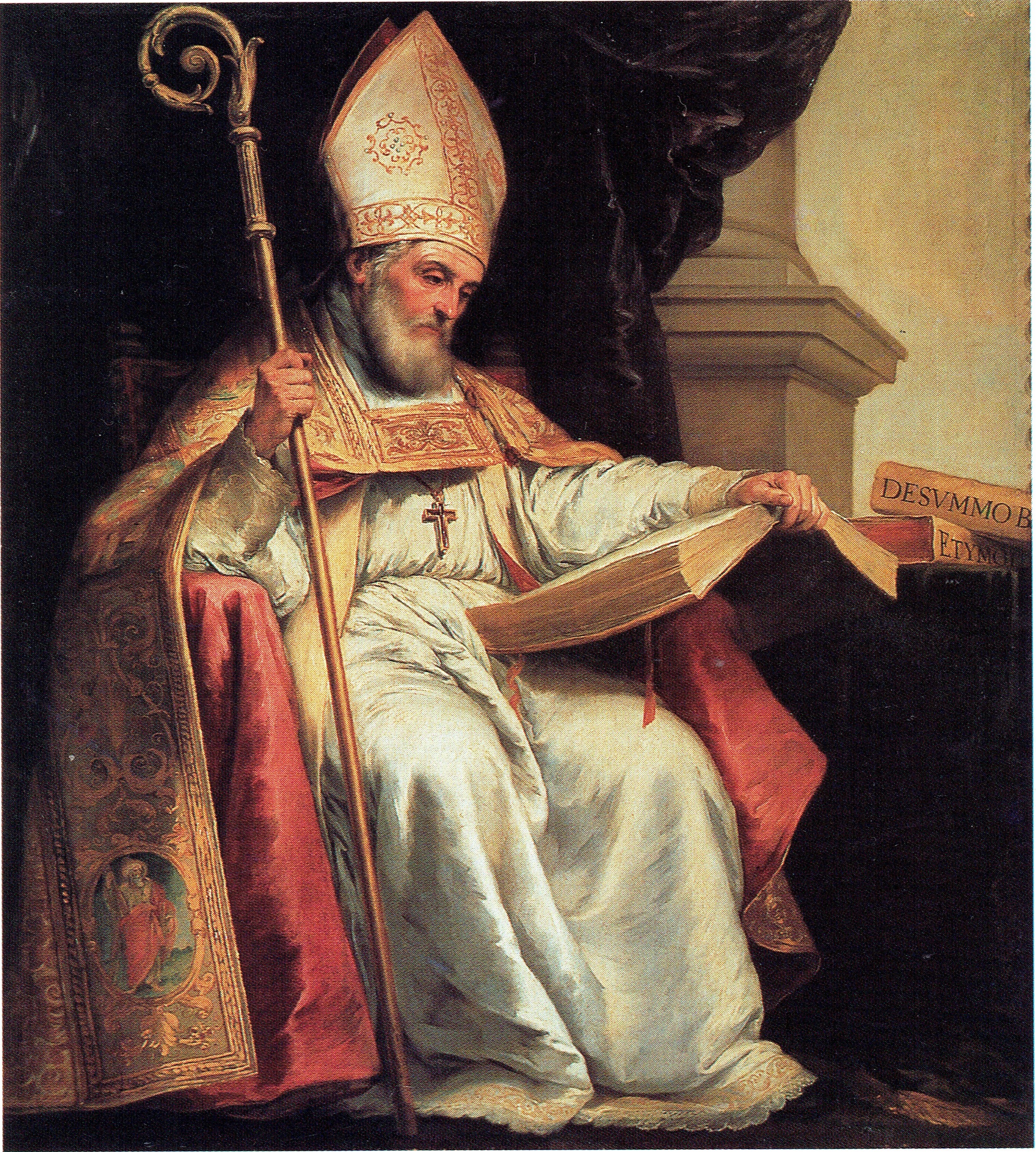
St. Isidore of Seville, Ora Pro Nobis!


April 4 is the feast day of St. Isidore of Seville. Isidore is a doctor of the Church and, according to the CNA entry, is "the last of the ancient Christian philosophers and great Latin Fathers." He is the patron saint of the internet (appropriate for all bloggers!), and author of the first encyclopedia ever written. He died April 4, 636.


Prayer for the intercession of St. Isidore of Seville
(proposed) Patron Saint of Internet Users


Almighty and eternal God,
who created us in Thy image
and bade us to seek after
all that is good, true and beautiful,
especially in the divine person
of Thy only-begotten Son,
our Lord Jesus Christ,
grant we beseech Thee that,
through the intercession of Saint Isidore,
bishop and doctor,
during our journeys through the internet
we will direct our hands and eyes
only to that which is pleasing to Thee
and treat with charity and patience
all those souls whom we encounter.
Through Christ our Lord.
Amen


(Prayer from Catholic Web Resources)

Monday, March 30, 2009

Sin and Prayer in the Catechism

The final year of the Why Catholic program covers Part Four of the Catechism of the Catholic Church: Christian Prayer. The part on prayer is the smallest of the four parts of the Catechism, so the number of paragraphs covered by each of the 12 sessions is smaller than in any of the previous three years. I've read the covered paragraphs as we've worked our way through, so in just two weeks, I will have completed reading the Catechism cover to cover for the second time (plus going to it for reference).

Every now and then, I read something that I don't understand. Such is the case in paragraph 2744, which quotes St. John Chrysostom's Sermon on Anna:

Nothing is equal to prayer; for what is impossible it makes possible, what is difficult, easy. . . . For it is impossible, utterly impossible, for the man who prays eagerly and invokes God ceaselessly ever to sin.


When I first read this, I though, "Whoa, that's way over the top! We're all sinners! I pray, and I sin. For this to be true, either my prayers aren't prayers, or my sins aren't sins!" I freely admit that I was conflicted. I thought that the quoted passage couldn't possibly mean what it literally said, and so I assumed that the original context of the quote would provide the true meaning. Perhaps when he says sin, he's specifically talking only about mortal sin. But, I can't find the Sermon anywhere on line, and I don't have any compilations of St. John's writings anywhere at hand. I have no idea what the context is.

I tried to convince myself that the passages in the Catechism that are in the smaller font are ancillary. They are there to add flavor, if you will. What's more, a quoted passage is no more infallible by virtue of being included in the Catechism than it was in its original context. Saints, while holy and virtuous, are not necessarily infallible with respect to the doctrine of their writings.

Now, as I sit pondering the passage, I suppose that the whole thing pivots upon those two words, "eagerly" and "ceaselessly." If one is in constant communion with God in prayer, then there would be no sin. It is only when we break that communion, or flag in our devotion, that we fall from grace.

I have apparently come around on the quote by St. John Chrysostom, at least to the extent that praying eagerly and ceaselessly is as hard as living completely free from sin, and the attempt is necessary for any who wishes to lead a holy life.

For the second saint quoted in paragraph 2744, St. Alphonsus Liguori, I'm going to have to give that more thought on a different day.

Thursday, March 19, 2009

What Would Joseph Do?

Jesus never had a wife. He never had a family for which he had to make provisions. Yes, I understand that the Church is his bride and that he would have had to provide for his mother and that we are all, in some sense, his children. Still, as a husband and father, it is sometimes hard for me to look to Jesus as the model of my behavior. I am tied down in a way that he never was.

The Church also proposes to us the Blessed Virgin Mary as a model of holiness. Again, the argument can be made that, as a parent, she raised the Son of God and that, when Jesus from the cross, entrusted to her motherhood the beloved Apostle, he was entrusting to her motherhood all believers. But I’m a little old-school in thinking that motherhood is a little different from fatherhood. The ideal of the perfect woman cannot be applied to a man to arrive at the perfect man.

I have, for a long time, had a special devotion to St. Joseph. As a husband and a father, he provides an example that I often have trouble seeing in Jesus or Mary. On occasion, I find myself wondering, “What would Joseph do?”

When I have a busy week, with meetings and activities every night, I can't help but wonder whether St. Joseph would have done all this. Would he have been on the pastoral council at the local synagogue? Would he have participated in the local Jewish Men's Fellowship? Would he have coached a sports team or led a cub scout den for little Jesus?

I have trouble picturing it. He seems to me to have been a just man who worked hard, loved his family, and sought righteousness before God. Do justice, love mercy, walk humbly with God -- isn't that the message of the prophets? So why do I feel compelled to try to do more? Taking Joseph as a model, my most important tasks in life are to love God, love my wife, and love my children.

Things sometimes seem harder for me. My wife, though she has many virtues, was not immaculately conceived. There are rare occasions when she makes it hard for me to be holy. My six children, likewise, are not like us in all things but sin. When it comes time for them to go to Confession, they might claim to be sinless, but their parents know better. Joseph didn't have to work with the family that I've got. Yet, perhaps if I were a little more like Joseph, my wife would find it easier to imitate Mary and my children to imitate Christ. I haven't had to flee from any homicidal kings who wish to see my children dead.

I have much to learn from St. Joseph, and I pray that he will intercede on my behalf.

St. Joseph, most chaste spouse of the Blessed Virgin Mary, pray for us!

St. Joseph's Sublime Dignity

Today is the Solemnity of St. Joseph, husband of the Blessed Virgin Mary.

It is certain that the dignity of the Mother of God is so exalted that nothing could be more sublime; yet because Mary was united to Joseph by the bond of marriage, there can be no doubt but that Joseph approached as no other person ever could that eminent dignity whereby the Mother of God towers above all creatures. Since marriage is the highest degree of association and friendship, involving by its very nature a communion of goods, it follows that God, by giving Joseph to the Virgin, did not give him to her only as a companion for life, a witness of her virginity and protector of her honor: he also gave Joseph to Mary in order that he might share, through the marriage pact, in her own sublime greatness.


Pope John Paul II in Redemptoris Custos,
quoting Pope Leo XIII in Quamquam pluries.

The Catholic Church makes a pretty big deal out of St. Joseph, even though very little is written of him in scripture. God entrusted to him the care of his own Son. St. Joseph continues that role as patron of the whole Church. The Popes have asserted that St. Joseph approaches in a way that no other saint can, the unique role that Mary played and continues to play.

Father,
you entrusted our Savior to the care of Saint Joseph.
By the help of his prayers
may your Church continue to serve it Lord, Jesus Christ
who lives and reigns with you and the Holy Spirit,
one God, for ever and ever.
Amen.

Wednesday, December 24, 2008

Joseph at Bethlehem

If I were Joseph, I think that I would have felt more than a little inadequate.

God, having chosen to bless Mary with the singular privilege of bearing the Messiah, appointed Joseph their guardian, and with the birth of the young Messiah imminent, Joseph couldn't even find them a decent place to stay. Yes, it was the Romans' fault for making everybody return to the town of their fathers to register for the census, but surely a more industrious man could have made arrangements for his pregnant young wife to sleep in some comfort and security.

But Joseph, arriving in Bethlehem with Mary, was turned away from the inn. At least he was able to swing permission for them to sleep in the stable with the animals. For a person with great faith, such as Joseph was, he must have been thankful for that. I think that I would have been discouraged. I would have been tempted to wonder what God could have been thinking. The child is about to be born in a stable! He deserves so much more! He deserves more than I (Joseph) can give him.

In retrospect, we all know that God had his reasons. The circumstances surrounding the birth of Christ serve to highlight the humility of the incarnate deity. The trappings of wealth and power are not significant to God. In fact, they often get in the way.

On this blessed night, I pray that God will grant me the graces that I need to surrender to his will. I look to Joseph as a model of what a father should be, and I pray for his intercession. St. Joseph, pray for us.

Thursday, December 11, 2008

On John the Baptist

Every Saturday morning, I meet with a group of men at a friend’s house. Every other Saturday, we reflect upon the gospel for the following Sunday. Last week, we discussed Mark 1:1-8. This coming week, we will hear more about John the Baptist, so I thought I would share some of the points from our discussion (from my sometimes faulty memory).

The people obviously saw something in John. The crowds went out to hear him. Even the priests and Levites went out to him, asking if he was Elijah, the Christ, or the Prophet. Malachi 4:5 states, “Behold, I will send you Elijah the prophet before the great and terrible day of the Lord comes.” In Deuteronomy 18, a prophet (the Prophet) like Moses is promised. John is a bridge between the Old Testament and the New. The God of the prophets, the God of Abraham, Isaac, and Jacob, is the same God who took on a human nature, walked among us, suffered, died, and rose, and established His Church.

What did John expect the messiah to be? His answer when questioned about his own identity was to invoke Isaiah 40. Isaiah should provide the context for John’s understanding of the messiah. Isaiah is rich in shepherd imagery and, of course, the Song of the Suffering Servant. Our salvation is from Christ’s redemptive sacrifice. While we must participate in politics, we must recognize that no political program can replace the personal encounter with Christ that leads to eternal life.

John’s message is not “Rejoice! For the Kingdom of God is at hand!” Rather, John preached repentance and baptism. His specific message to people seemed to be simply to do what is right and just for your state in life. It is almost as if everyone is corrupt and on the take. For us, the call to repentance requires a daily turning away from self and toward God. In our work and in our almsgiving, we must go beyond what is legally required to what is right and just.

John was dressed in camel hair with a leather girdle, and he ate locusts and wild honey. That must be significant. In 2 Kings 1:8, it is noted that the prophet Elijah wore haircloth and a leather girdle. Zechariah 13:4 notes that any future prophet will wear a hairy mantle. Leviticus 11:22 notes that locusts and grasshoppers are considered “clean” and may be eaten without violating the dietary laws. Deuteronomy 32:13 and 1 Samuel 14:25-27 both refer to eating wild honey. So the clothing is that of a prophet (specifically Elijah) and the food is what one would be permitted to eat if living off the land in the wilderness. In other words, John trusted God entirely for his sustenance. While it might not be practical for us to dress in coarse wool or eat from whatever the land offers us, we can live simply, trusting in God’s providence.

John was the first to recognize the Christ, when he leaped for joy within the womb of his mother Elizabeth as Mary approached following the Annunciation. Once Jesus begins his public ministry, John points others to him. John acknowledges that he must increase and I must decrease. He is much like Mary, who always points us to her Son. In our efforts to evangelize others, we must always ensure that we do not become the focus of attention. Like John and Mary, we always want to point others to Him.

Saturday, December 6, 2008

Adventures in Home Plumbing

I’m not much of a do-it-yourselfer. On those occasions in the past when I’ve tried, I’ve been nearly as likely to make things worse than to make them better. Even when it does work out, I usually end up doing things at least three times before I get it right.

So I didn’t exactly jump at the chance to buy a new dishwasher when ours started dying. We thought that it was dead about two months ago, but it appears to have just been the death of the heating coils. As long as we didn’t use the heated start or heated dry options, the washer would still work. Over the last two weeks, though, our dishes just haven’t been getting clean.

My dear wife’s complaining finally broke through my filter, and we went out earlier this week (Tuesday) to buy a new dishwasher. We resisted the salesman’s efforts to upgrade us to a model with features that we neither needed nor wanted and turned down the stainless steel flexible hose. In spite of all of the stories about frozen credit markets, we applied for and were given in-store credit for 12 months same-as-cash and were able to take a model home the same day.

I resisted installation on Wednesday and Thursday, but by Friday, I knew that I would have to succumb so that my wife, the mother of my children and so much more, could have clean dishes for St. Nick’s day.

I said a prayer to St. Joseph, figuring that as a carpenter, he should have patronage over all kinds of home repairs, but decided to look up the patron saint of plumbers as well. I never would have guessed St. Vincent Ferrer! So, I said a quick prayer to St. Vincent for guidance and intercession, and got my tools to begin removing the old dishwasher.

I was pleased to find that the old dishwasher’s electric leads were terminated in a plug, so I didn’t have to try to figure out which circuit breaker the dishwasher was on, and the only real mistake that I made was in forgetting to turn off the water – there was only a little leakage involved.

The old dishwasher came out, the new dishwasher went in, and I didn’t appear to have made any big mistakes. It took me about three hours, and the worst part was that I couldn’t find a working flashlight anywhere in the house. I tried the new dishwasher on rinse, and everything seemed to work right. Prayers of thanksgiving went out to God and to Sts. Vincent and Joseph.

When we woke this morning, however, I was filled with dread when my wife went to the sink and found a total lack of water. No hot, no cold. The only line I had done anything at all to the previous night was the hot water line from the water heater, the same one that fed the dishwasher. More prayer, this time pleading, to St. Vincent!

I checked the lines in the basement, and couldn’t find anything. I told my wife, “Maybe it’s the village. I’ll ask Steve when I see him whether he has any water pressure.” That seemed reasonable, but just a few moments later, my wife informed me that the water to the toilet was running. I looked in the reservoir and, sure enough, if I pressed down on the float, the water started running. I checked the sink again, but there was still no water pressure.

Back down to the basement, wondering how I could have screwed this up. I actuated all the valves closed and back open. I fiddled with the water softener system, even though we don’t need it anymore since the village upgraded the water treatment (I don’t want to pay a plumber to remove it, and I’m afraid to try to do it myself). Back upstairs, but still no water pressure.

I finally admitted defeat. Thank you, St. Vincent, but it looked like I was going to have to call in someone who knew what they were doing.

Five minutes later, the water was working again. I don’t know how; I don’t know why. But I am grateful and ready to admit my utter dependence upon God for all things, including indoor plumbing.

Friday, November 21, 2008

The Presentation of Mary

I was helping out at our local ConQuest boys' club meeting on Thursday, when I looked at the calendar and noted that today is the Memorial of the Presentation of Mary. I had heard of it before, but I didn't realize that there was actually a day set aside for it in the Church calendar. My prayer book says this:

This feast commemorates the dedication of the church of Saint Mary which was built in Jerusalem near the site of the Temple. With Christians of the East, the Latin Church also recalls on this day the tradition according to which Mary as a small child was presented to the Lord by her parents in the Temple.

I wasn't completely satisfied with this answer, so I checked the Catechism, Radio Replies, and Catholic Replies. Finally, I decided to just go to the original source, the Protoevangelium of James:

And the child was three years old, and Joachim said: Invite the daughters of the Hebrews that are undefiled, and let them take each a lamp, and let them stand with the lamps burning, that the child may not turn back, and her heart be captivated from the temple of the Lord. And they did so until they went up into the temple of the Lord. And the priest received her, and kissed her, and blessed her, saying: The Lord has magnified your name in all generations. In you, on the last of the days, the Lord will manifest His redemption to the sons of Israel. And he set her down upon the third step of the altar, and the Lord God sent grace upon her; and she danced with her feet, and all the house of Israel loved her.
There's a reason that the Church didn't include this stuff in the canon of scripture. It might be interesting, but it's not reliable. And yet, the Church recognizes the memorial of the event, and she recognizes Sts. Anne and Joachim as the parents of the Blessed Virgin Mary. I have to assume that some of the content of this particular apocryphal book might be true, but that some of it is not. If I can't tell the difference, and it all sounds a little hokey, I think that it's best for me to stay away from it. I'm going to stick with the canonical books, which contain all of the public revelation necessary for my salvation.

Tuesday, November 18, 2008

Patron of Veterinarians

My nephew is taking his veterinary boards today, and his mother (my sister) asked me to remember him in my prayers. Being the Catholic that I am, I had to look up the patron saint of veterinarians. I was expecting St. Francis, based on the annual blessing of animals on his feast day in October. Instead, I was surprised to learn that it is St. Eligius. Eligius was apparently a metal smith in the 7th century who became a bishop. How does a metal worker become patron saint of veterinarians? Eligius liked horses. When he died, he left one to a priest. The new bishop took the horse from the priest. The horse got sick. The horse was returned. The horse got better. So now, he is the patron of all veterinarians.

As for the boards, I don't just want to pray that Kyle passes. I am confident that he knows his stuff, so I pray that he will remain calm, and that God (and Eligius!) will facilitate his memory, that he may recall his training and studies appropriately.

St. Eligius, please pray for Kyle.

Monday, November 17, 2008

People Get Ready

Jesus is comin' . . . .

Yeah, I listen to some Contemporary Christian music. Some of it is pretty good, some of it is pretty bad, and some just has a way of getting stuck in your head. Better that than the latest offering from Kid Rock.

That's not what I'm posting about, though. This past Sunday, we read from the First Letter of Paul to the Thessalonians:

"But as to the times and the seasons, brethren, you have no need to have anything written to you. For you yourselves know well that the day of the Lord will come like a thief in the night."

The Office of Readings from the Liturgy of the Hours featured a passage from the book of the prophet Joel concerning the last days and a discourse on the psalms by Saint Augustine. I really liked the way that Augustine put it:

"He will come whether we wish it or not. Do not think that because he is not coming just now, he will not come at all. He will come, you know not when; and provided he finds you prepared, your ignorance of the time of his coming will not be held against you."

I really like St. Augustine. The challenge for us is to live our lives as if the end could come tomorrow, while at the same time living as though our grandchildren will still be looking for the day of His coming. Is the eschaton imminent? Nobody knows. It shouldn't make a difference in how you live your life.